

Is Sekiro Better Than Bloodborne
FromSoftware and "Soulsborne" games have gotten quite a bit of attention this concluding generation. Before the PS4/Xbox 1 generation, Dark Souls was nevertheless a relatively niche series, only enjoyed by the almost hardcore fans. While information technology's not necessarily true, the stigma ofNighttime Souls games existence prohibitively difficult is still pervasive fifty-fifty to this day. Even so, in the concluding generation, FromSoftware was able to break downwardly some of those walls past expanding beyond theDark Souls world in various means.
Later onDark Souls two, FromSoftware released a few standalone games in-between the main franchise, experimenting with diverse different takes on a Dark Souls feel. BothSekiro : Shadows Die Twice andBloodborne came out in a very foreign time forSouls-like games. Each game takes a very unlike approach to innovating, improving, or altogether changing the dynamic that'southward typically found in aDark Souls game. These two formative games have left a deep impression on FromSoftware, and inspirations from both games will likely filter into futureSouls games.
Sekiro, A Very Different Souls-Like Game
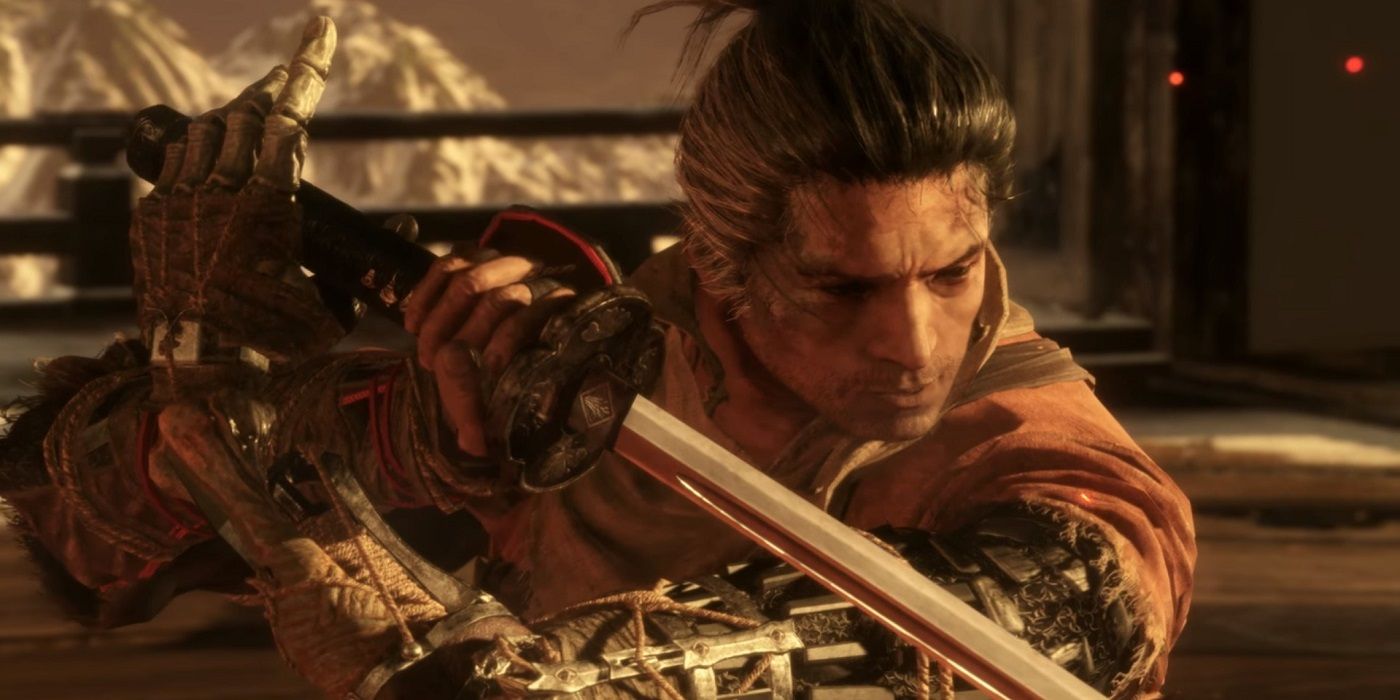
Compared straight to everyDark Souls game earlier information technology, evenDark Souls 3,Sekiro: Shadows Die Twice is a very different game. Both from a thematic/story perspective, likewise as a gameplay perspective,Sekiro takes an entirely different approach. Evolution onSekiro initially began as a spiritual successor toTenchu, and that certainly shows in the gameplay mechanics.Sekiro is inherently designed to play much more aggressively compared toDark Souls, and while elements of defensive mechanics like the posture system encourage strategy, many bosses can exist assaulted and browbeaten with intelligent crime.
Playing as the Wolf,Sekiro players could nuance faster and bound (and fifty-fifty wall jump) higher than whatever previousSouls game to date. Mechanically speaking, the game plays much faster thanDark Souls, and to a lesser extentBloodborne. Each boss meet rewards aggressive attacking, since at that place'due south no stamina bar and the posture meter encourages offensive pressure. From a story viewpoint,Sekiro is far more linear compared to whateverDark Souls game as well. The story is told through grapheme moments and interactions, rather than the more than subtle ecology storytelling found inDark Souls games. Overall,Sekiro is easily the about different Soulsborne game to appointment.
Bloodborne, A Familiar Twist on Dark Souls
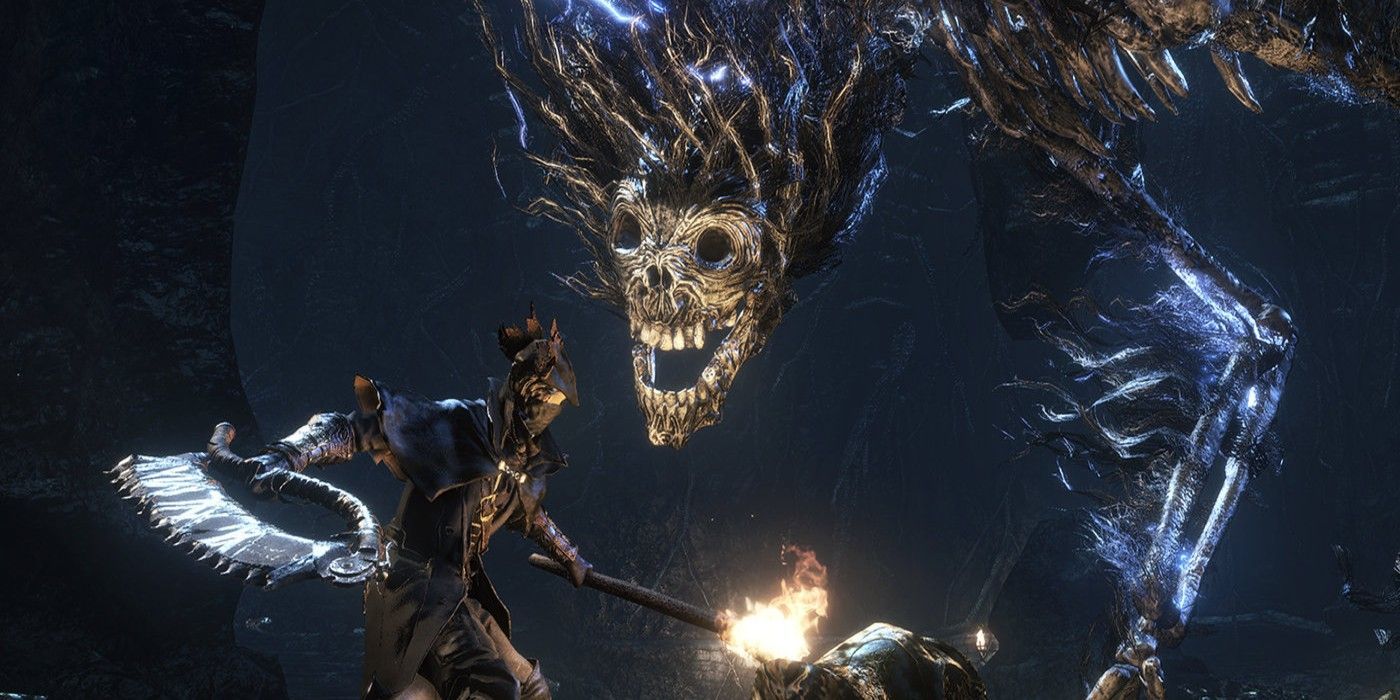
On the other hand,Bloodborne was the kickoff stride made by FromSoftware to endeavor something new on PlayStation iv. Despite the differences in setting, character builds, and weapons,Bloodborne was actually much closer to traditionalSouls games than new players may have expected. At that place's far more than customization bachelor to the player for character builds, and mechanically speaking,Bloodborne plays a lot similar whatNighttime Souls iiibecame. The major differences came in the specific stats, but more importantly the stance swaps with different weapons.
Nearly every weapon inBloodborne had the ability to bandy weapon modes on the fly, irresolute instantly from a one-handed axe to a polearm in a 2d. Rather than just sticking to calorie-free attack/heavy assault, the extended weapons could change fighting styles completely, assuasive for more than variety and versatility. For example, Ludwig's Holy Bract could turn from a quick-thrusting short sword into a heavy buster sword to deal massive damage. The Hunter's Axe swapped from a strong one-handed weapon into a huge area-of-effect weapon.Bloodborne stuck to the traditional freedom of play thatNighttime Souls ever ascribed to.
Both Games Print In Unique Regards
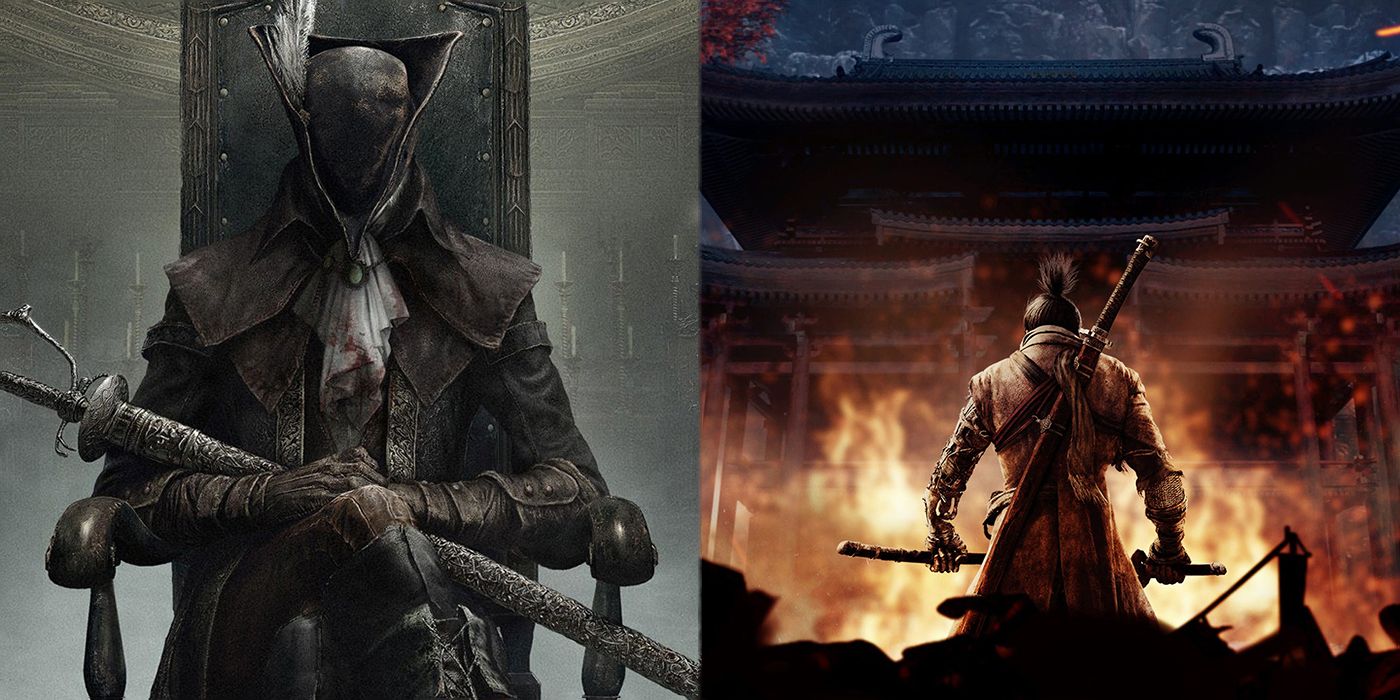
BothSekiro andBloodborne areSouls-like games, simply they actually practice play like two unlike games in a practiced way.Sekiro chases a much more fluid and fast combat experience, reliant on the posture system to push aggressive play confronting bosses.Bloodborne resemblesNighttime Souls more thanSekiro, but nevertheless has a lot of visual and gameplay flair to make it distinctly its ain game.Bloodborne has far less linearity compared toSekiro in its story, but that'due south largely because the narrative in both games follows a different beat. Players can't create their own graphic symbol inSekiro considering of its directly characters and story, whereasBloodborne has a blank slate protagonist merely likeDark Souls.
Each game excels in its ain area.Bloodborne'southward unique setting and opinion-swapping weapons made for an interesting nevertheless familiar tweak onDark Souls.Sekiro: Shadows Die Twice acts as a distinct divergence that references theDark Souls spirit, just endeavors to tell its own directly story with memorable characters and clear management for players. The gameplay differences each emphasize unlike desires, different playstyles, each to embody a dissimilar type of experience. That's what makes these games so special, they're each in their own spheres of influence.
Bloodborne is available at present on PS4. Sekiro: Shadows Die Twice is available now on PC, PS4, Stadia, and Xbox One.

Is Sekiro Better Than Bloodborne,
Source: https://gamerant.com/souls-games-sekiro-shadow-die-twice-vs-bloodborne/
Posted by: williamsbrin1942.blogspot.com
0 Response to "Is Sekiro Better Than Bloodborne"
Post a Comment